Congress Approves COVID Relief Funding
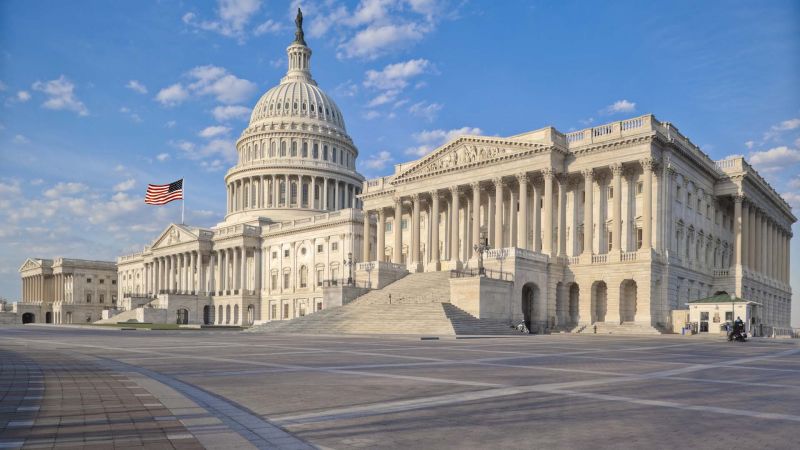
Congress Approves Economic Aid for Small Businesses, Schools, Employees, Gig Workers, and Venues: The $900B Coronavirus Stimulus Package and $1.4T Appropriations Legislation
December 22, 2020:
Congress approved bipartisan, bicameral legislation to provide timely and much-needed relief to hard-hit businesses during the COVID-19 pandemic, which has fundamentally altered our nation’s music and arts landscape with small business owners, manufacturers, employees and music educators, among others, facing serious economic hardship.
The White House has indicated that President Trump will sign the legislation.
Since last March, NAMM has been at the forefront of advocacy efforts for federal relief to assist NAMM members, their employees and family members, as well as countless others in the music industry. The pandemic, unfortunately, outlasted the initial economic relief programs established under the CARES Act and other legislation.
With this package, however, Congress has heeded the calls for renewed and robust assistance. The legislation is nearly 6,000 pages.
Notably, it reopens and refines the Paycheck Protection Program (PPP), a lifeline for small businesses, with an infusion of $284.45 billion through March 31, 2021. It also extends unemployment insurance benefits for employees and gig workers and provides schools with vital financial and technology-based resources to help teachers and students weather the pandemic.
Treasury and the Small Business Administration will need to offer guidance on several of the programs, including a second draw for PPP payments. Such guidance is expected within 10 days the legislation becoming law. Treasury Secretary Mnuchin has stated that direct payments to qualified individuals and families could be done via direct deposit “early next week.” The bill also provides needed relief to states, K-12 schools, and higher education institutions that have been significantly impacted by coronavirus.
The text of the spending package, H.R. 133, is available here.
A division-by-division summary of the appropriations provisions is here. division-by-division summary of the coronavirus relief provisions is here. division-by-division of the authorizing matters is here. Below is a recap of key provisions:
Education
- Education Stabilization Fund – $82 billion: Flexible funding to support the educational needs of states, school districts, and institutions of higher education and the students they serve in response to coronavirus. This bill provides funding to provide relief to states, K-12 institutions, and higher education institutions that have all been significantly impacted by coronavirus. These funds are flexible and can be used on a variety of things to provide educational services to students and support the on-going functionality of school districts and colleges and universities. Like the CARES Act, the education funding is split into three funds as follows:
- Elementary and Secondary School Emergency Relief Fund: $54.3 billion
- Higher Education Emergency Relief Fund: $22.7 billion
- Governors Emergency Education Relief Fund: $4.05 billion
- It includes a $2.75 billion set aside for services for private K-12 schools.
- Provides $16.54 billion for Title I, a $227 million increase from the previous fiscal year.
- Provides $1.22 billion for Title IV-A for well-rounded education, including music and the arts. A $10 Million increase over the current fiscal year for SSAEG Grants.
- Broadband – The agreement invests $7 billion to increase expand broadband access for students, families and unemployed workers, including $300 million for rural broadband and $250 million for telehealth.
- Child Care – $10 billion in emergency cash is included for childcare providers through the Child Care and Development Block Grant (CCDBG).
- Exclusion for certain employer payments of student loans – The provision extends, through 2025, the allowance for employers to provide a student loan repayment benefit to employees on a tax-free basis. Under the provision, an employer may contribute up to $5,250 annually toward an employee’s student loans, and such payment would be excluded from the employee’s income. The $5,250 cap applies to both the student loan repayment benefit as well as other educational assistance (e.g., tuition, fees, books) provided by the employer under current law. The provision applies to any student loan payments made by an employer on behalf of an employee through 2025.
Unemployment Insurance - $120 Billion
In this relief bill, $120 billion in additional federal funding is provided to struggling workers nationwide by extending the historic unemployment insurance expansion established by the CARES Act, through March 14, 2021. Specifically, the bill:
- Provides enhanced unemployment insurance benefits through the Federal Pandemic Unemployment Compensation (FPUC) program. It provides an additional $300 per week to supplement all state and federal unemployment benefits, starting after December 26, 2020 and ending March 14, 2021.
- Extends the Pandemic Unemployment Assistance (PUA) program, which provides continued unemployment assistance to the self-employed, freelancers, gig workers, part-time workers and other individuals in non-traditional employment. It also increases the number of weeks of PUA benefits an individual may claim, from 39 to 50.
- Extends the Pandemic Emergency Unemployment Compensation (PEUC) program, providing additional weeks of federally funded benefits to workers who have exhausted their regular state unemployment benefits. It also increases the weeks of PEUC benefits an individual may claim, from 13 to 24.
- Provides full federal financing of state Shared Work programs, allowing employers to avoid layoffs during the downturn by connecting their employees who are working reduced hours with partial unemployment compensation, through March 14, 2021.
- “Mixed Earner” Unemployment Compensation. Provides a federally funded $100 per week additional benefit to individuals who have at least $5,000 a year in self-employment income but are disqualified from receiving Pandemic Unemployment Assistance because they are eligible for regular state unemployment benefits. This mixed-earner supplemental benefit ends on March 14, 2021.
Direct payments to Individuals - $166 Billion
- Individual adults with adjusted gross income on their 2019 tax returns of up to $75,000 a year will receive a $600 payment, heads of household making up to $112,500 and a couple earning up to $150,000 a year would get twice that amount. If they have dependent children, they also receive $600 for each child.
Small Business
- $284.45 billion for the Paycheck Protection Program (PPP), including the following set-asides:
- Lenders:
- $15 billion for PPP loans (initial and second draw) issued by community financial institutions, including community development financial institutions (CDFIs) and minority depository intuitions (MDIs)
- $15 billion for PPP loans (initial and second draw) issued by certain small depository institutions.
- Borrowers:
- $35 billion for first-time borrowers, $15 billion of which for smaller, first-time borrowers with 10 or fewer employees, or loans less than $250,000 in low-income areas.
- $25 billion for second draw PPP loans for smaller borrowers with 10 or fewer employees, or loans less than $250,000 in low-income areas.
- $20 billion for the Targeted EIDL Advance program, of which $20 million for the Inspector General.
- Lenders:
- Revisions to target PPP loans to small businesses:
- Prevents publicly traded companies from receiving PPP funds.
- Allows businesses with fewer than 300 employees and revenue losses of at least 25% to apply for another round of PPP funding, if they have exhausted the first loan.
- Adds certain expenses for use of PPP funds and loan forgiveness eligibility, including personal protective equipment, software for accounting/human resources and essential supplier costs.
Tax Provisions
- Clarification of tax treatment of PPP loans and loan forgiveness under the CARES Act:
- Clarifies that (1) gross income does not include any amount that would otherwise arise from the forgiveness of a PPP loan; and (2) deductions are allowed for deductible expenses paid for with proceeds of a forgiven PPP loan.
- Clarifies that gross income does not include forgiveness of certain loans, emergency EIDL grants and certain repayment assistance. Also clarifies that deductions are allowed for otherwise deductible expenses paid by such loans or assistance.
Grants for Shuttered Venue Operators
- Authorizes $15 billion for the Small Business Administration (SBA) to make grants to eligible live venue operators or promoters, theatrical producers, live performing arts organization operators, museum operators, motion picture theatre operators, or talent representatives who demonstrate at least a 25 percent reduction in revenues. Ineligible entities would include those that are publicly traded, operate venues in multiple countries or more than 10 states, employ more than 500 workers, receive more than 10% of their gross revenue from federal funding.
- There is a set-aside of $2 billion for eligible entities that employ not more than 50 full-time employees, and any amounts from this set-aside remaining after sixty days from the date of implementation of this program shall become available to all eligible applicants under this section.
- The SBA may make an initial grant of up to $10 million dollars to an eligible person or entity and a supplemental grant that is equal to 50 percent of the initial grant. Initial grants would be the lesser of 45% of an entity’s gross revenue in 2019 or $10 million.
- In the initial 14-day period of implementation of the program, grants shall only be awarded to eligible entities that have faced 90 percent or greater revenue loss. In the 14-day period following the initial 14-day period, grants shall only be awarded to eligible entities that have faced 70 percent or greater revenue loss. After these two periods, grants shall be awarded to all other eligible entities.
- Such grants shall be used for specified expenses such as payroll costs, rent, utilities, and personal protective equipment.
- Requires the Administrator to conduct increased oversight of eligible persons and entities receiving these grants.
- Requires the SBA to submit a report to the Senate and House Small Business committees 45 days after enactment detailing their oversight and audit plan for shuttered venue grants and to provide monthly updates on the oversight and audit activities conducted by the Administrator.
State and Local Governments
- Coronavirus Relief Fund Extension — This bill extends the availability by one year (until Dec. 31, 2021) for funds provided to states and localities by the Coronavirus Relief Fund in the CARES Act.
Next Steps: A Call to Action
Many in Washington are calling this additional relief a “down payment” on a larger relief package early next year under a Biden Administration and a new Congress. This legislation shows that grassroots advocacy can lead to bipartisan solutions for America’s small businesses, schools, and affected individuals. When the new Congress gets down to business on January 3rd, NAMM will continue to communicate with our members and will advocate for much needed additional funding.