Library - In Memoriam
Remembering oral history interviewees who have passed away.
Spider Wilson began recording with Little Jimmy Dickens in 1947 and over the years backed nearly every performer at the Grand Ole Opry as a house band guitarist from the late 1950s until 2006. Spider was a sought-after studio musician playing guitar on recordings by country, rock
Bill Tregoe drove over 1,300,000 miles over the 35 years that he was a sales rep for CG Conn and later King Musical Instruments. Along the way he made life long friends with many of the dealers and school directors he called on.
Clark Terry enjoyed a long and celebrated career as a trumpeter playing with nearly ever iconic jazz musician of the twentieth century.
Arlette Day and her husband, John, formed Day Murray Music in 1946. The name comes from the young couple’s last name and their hometown of Murray, Utah.
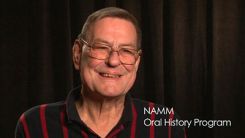
Dee Hoyt played professionally since he was a teenager including in local clubs and played for the National Guard as well as for dances. His band, the Tornados, recorded and performed rock and roll in the early 1960s. While playing at night, Dee got a job at Hayes Music as a sa
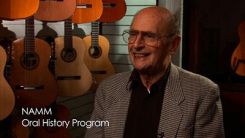
Neil Hauser took over the Allen & Heath business in the late 1960s at a time when a group of young engineers had an idea for a new product. The engineers, headed by Andy Bereza, created a small mixing board that could be used on the road as well as in the home.
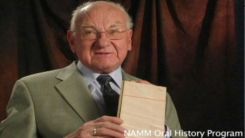
Fritz Kollitz was an expert on woods used for musical instruments and gained an international reputation for his knowledge and service to violin and guitar luthiers alike.
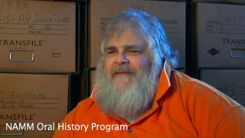
Bob See was the founder of See Factor, one of the pioneering and innovative pro-lighting and pro-sound services in the world. Bob’s influential career began when Bill Graham opened up a music venue in New York City called the Fillmore East in the late 1960s.
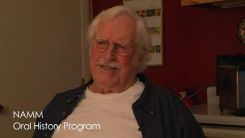
Bob Cavanagh was once the president of the famed Boston music retailer EU Wurlitzer (not to be confused with the R. Wurlitzer Piano Company, the Wurlitzer String Company or the Wurlitzer Juke Box Company).
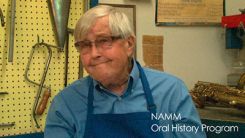
Fred Morgan was one of the few GI’s, returning home from World War II, who were accepted to the Conn School of Musical Instrument Repair the first year it started.