Library - In Memoriam
Remembering oral history interviewees who have passed away.
Frank Nelson played trumpet and cornet during the swing era, touring with Alvino Rey’s Orchestra among others. He arranged music for the bands, both small groups and the larger outfits and worked on a wide range of materials during his long career.
John McDermott could sure sell pianos! His knowledge of the products and his strong relationship with music retailers made him an ideal and successful sales rep. John worked for the Gulbransen Piano Company during the company’s innovative era of the mid 1960s through the 1970s.

Johnny Wright was among the most popular of the traveling country bandleaders during the big band era. Blending his country music roots with a slight bluegrass feel, Johnny’s band was the perfect backdrop for singers such as his beloved wife, Kitty Wells.
Russell Kephart enjoyed his years as a band director but found great satisfaction when he opened his own music store and could provide the service he felt band directors were missing. The Iowa-based store expanded over the decades but always remained focused on customer service.
Lothar Meisel was the ninth generation of violinmakers in his family, going back to 1660 in Klingenthal, Germany.

Kurt Lutz was a well-regarded German luthier who, along with many other instrument makers, settled in Bubenreuth, Germany following World War II. Mr.

Jerry Leiber was one half of Leiber and Stoller, one of the most influential and successful songwriting teams of the 1950s R&B movement.
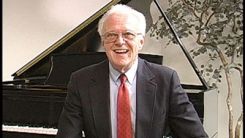
Tony Schmidt was the very first volunteer of the NAMM Foundation’s Museum of Making Music (located in the NAMM building) to provide 1,000 hours of service.

Billy Grammer formed his own guitar company after years of playing country music in and around Nashville. Billy recorded several hit records on his own as well as playing behind some of the biggest names in country music.

Bart Wascom was the electrical engineer who sought to improve the pro-audio speakers by improving the distribution of sound. After several tests, he concluded that large wooden cabinets compress many of the mid range tones.