Library - In Memoriam
Remembering oral history interviewees who have passed away.
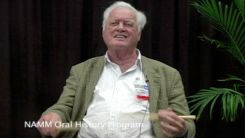
Jim Chapin had the idea of writing a method book for the beginning drummer that would provide clear examples and illustrations. The year was 1947 and no such book was in print. He gathered little hints and simple examples for the book that has become one of the best selling methods in the business. As a player, he toured and recorded countless times, but found the most satisfaction sitting down with one drummer or a room with 101 drummers and providing them with tools to improve their playing.

George Fullerton befriended Leo Fender back in the days before Leo quit the radio repair business and started in the guitar making business. George worked for the Fender Guitar Company from the beginning and up to the day it was sold to CBS Musical Instruments. After the sale of the company, Leo could no longer use his last name to produce and promote guitars, so he teamed with George to form a new company, named after the first letter in their first names. And so, G & L Guitars was born.

George Lewis was the founder of George L’s in Madison, Tennessee, one of the industry’s leading innovators of cable and electronic components. George played a large role in the development of ShoBud as a retail store and manufacturer of steel pedal guitars. George’s entire family works in the business, which is now being operated by his two daughters. His interview was as much a recount of his career as it was an American history lesson as George was on board a ship in Pearl Harbor on D

Heribert Glassl had two musical loves, the tuba and the cello. While it may seem like a strange pairing, Mr. Glassl made it work. In fact, after a long career in musical instrument making, the tuba and cello are the only products he produced in his small German factory.

Edward Garbett was the founder of the Progressive Music store in McKeesport Pennsylvania in the years following World War II. He worked for Gretsch as Educational Director and a decade later was hired by Yamaha and oversaw the company’s growing school band programs throughout th

Harry Benson became the president of William Lewis & Son when the company was under the ownership of Chicago Musical Instrument (CMI). Harry’s guiding principles resulted in the expansion of the violin line and the respect of fellow violin makers such as Kurt Glaesel. Harry was also the one-time boss of another industry veteran and strong supporter of this archive collection, Robert S. Johnson.

Ernesto Gittli was born in Uruguay and moved to the U.S. as a small boy before he began taking piano lessons. He met his wife, who also taught music, and together they envisioned a music school that would encourage all ages to become music makers. Gittli Music opened in the mid- 1960s with a strong focus on providing parents with an education regarding why music is important to their child long before “music makes you smarter” was ever a slogan.
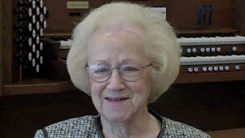
Marie Jensen was born in Rosebud, Texas as the daughter of a Texas Ranger. She graduated college in Houston with a business degree before meeting Al Jensen on a blind date. The two were married in 1954 and had their only child, a daughter, in 1959.
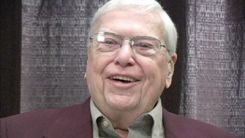
Jack Javens loved the piano business and became one of the industry’s quintessential salesmen. He worked for the Aeolian Piano Company out of East Rochester New York beginning in the 1950s and stayed for 26 years. He witnessed the famous merger between Aeolian and the Winter Piano Company in the mid 1960s and the strong competition of the home organ boom in the 1970s. Jack was proud of the products he sold and spoke of the rich company history of Aeolian, which went back to 1903.

Joseph Rashid studied the art of violin-making like few others. His goal was not to mass produce the instrument or even to sell them, but rather to hand-make the instruments based on scientific evidence. When he could not locate data on frequency measurements, he conducted his own studies to produce the needed data. These studies helped him create a violin with a higher quality of sound and he happily shared his finding with other luthiers. The results of many of his studies